
Kaufman County Arrest History
Kaufman County arrest history begins with the agency that made the arrest. The Sheriff covers unincorporated areas and keeps the county jail booking file. Forney, Terrell, Kaufman, and other city police departments keep their own incident and arrest narratives. Constables, Texas DPS Highway Patrol, and school or campus police retain records created by their officers. When a city officer delivers a person to the county jail, the city keeps the report while the Sheriff keeps intake, fingerprints, photograph, holds, bond, and release data.
An arrest record is not one permanent county-wide document. It is a chain of linked records. The magistrate adds warnings, probable-cause, and bond material. The Criminal District Attorney decides whether and what to file. If accepted, the County Clerk or District Clerk begins the court file. DPS later receives fingerprint and disposition reports from Texas agencies. Gaps or delays can occur when tracking numbers do not match or a disposition has not yet been reported.
Kaufman County Constables and DPS Highway Patrol can also create the first report. School or campus police retain records produced by their officers. The jail and clerk still hold the later stages when local booking and prosecution follow.
Kaufman City Arrests and County Bookings
A city arrest report and county booking record should be requested from different custodians. Forney Police retains a Forney officer's report and operates a local holding facility, so a fresh arrest may still be there. Terrell Police records and detention staff handle the city layer before a transfer. Kaufman Police says all arrested persons go to the Kaufman County Law Enforcement Center. In each path, continued county custody is checked with the jail.
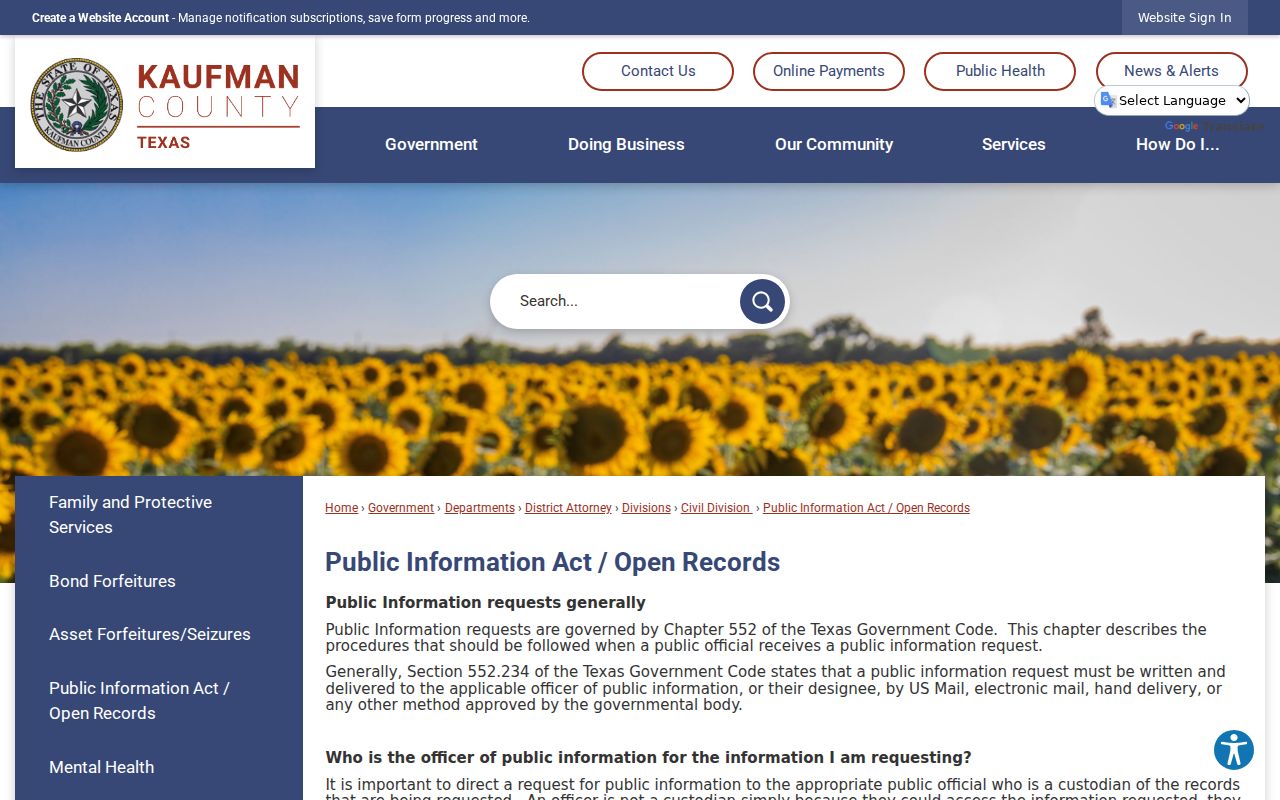
The official court and open-records route illustrates why the correct custodian matters when an arrest later becomes a case.
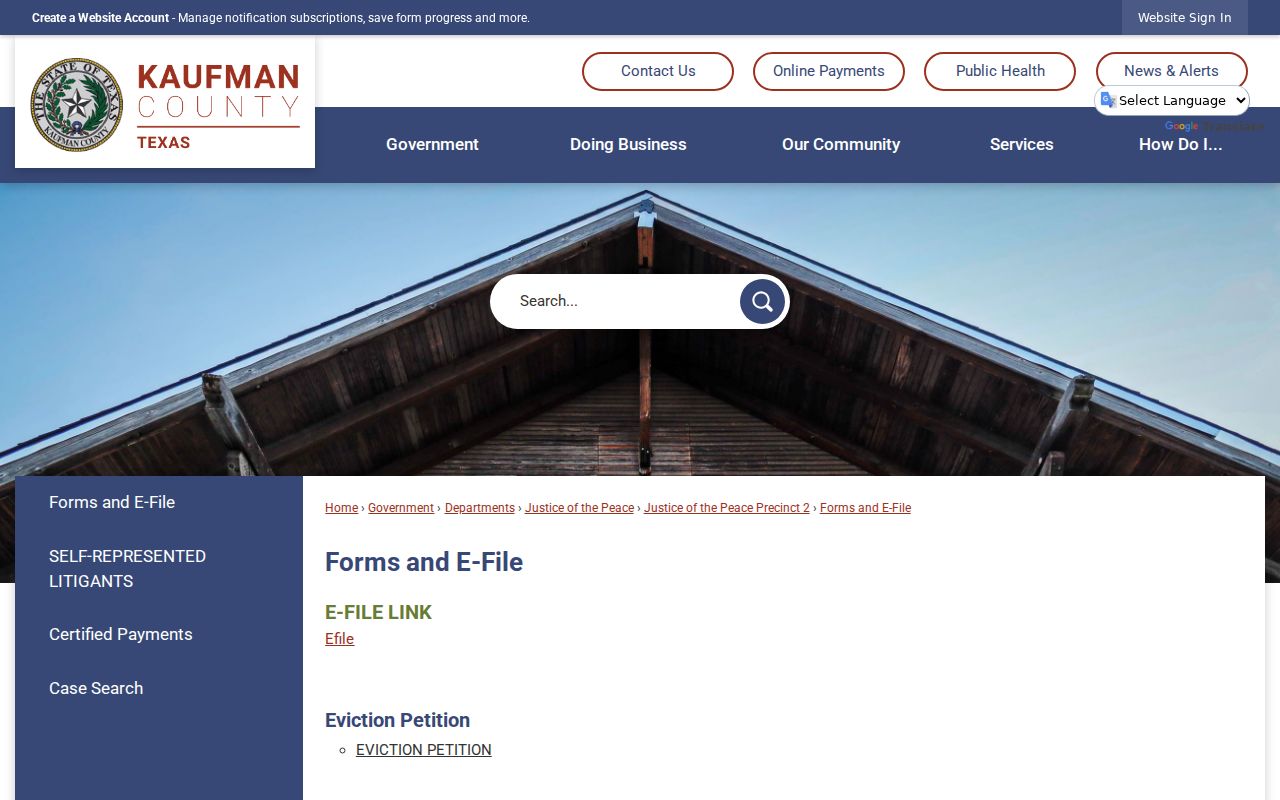
The court request channel can locate filed process, but the arresting agency remains the source for its narrative and the Sheriff remains the source for county booking data.
Looking Up Kaufman County Arrests
No official public county daily booking log was confirmed in the research. The practical route therefore begins with the jail phone line and continues through the record creator. Use a full name and date of birth to reduce false matches. A no-match does not prove no arrest occurred because the person may have been released, held by a city, transferred, or entered under a spelling variation.
- Call the Kaufman County jail at 972-932-4337 and ask about current custody, booking number, public charges, bond, and holds.
- Identify the arresting agency and request its incident or arrest report using the date, location, report number, and involved role.
- Use the Sheriff Form Center, mail, fax, phone, or the lobby for booking material that is not online.
- After prosecutor intake, search County Clerk for a Class A or B misdemeanor or District Clerk for a felony. Municipal courts keep Class C matters.
- Use the DPS public conviction search later for reported Texas convictions and deferred adjudications, not as a live arrest log.
- Check TDCJ or BOP if the person has moved to state or federal custody, or submit a focused Texas Public Information Act request for older data.
The Sheriff's online form center is pictured below as one county request channel.
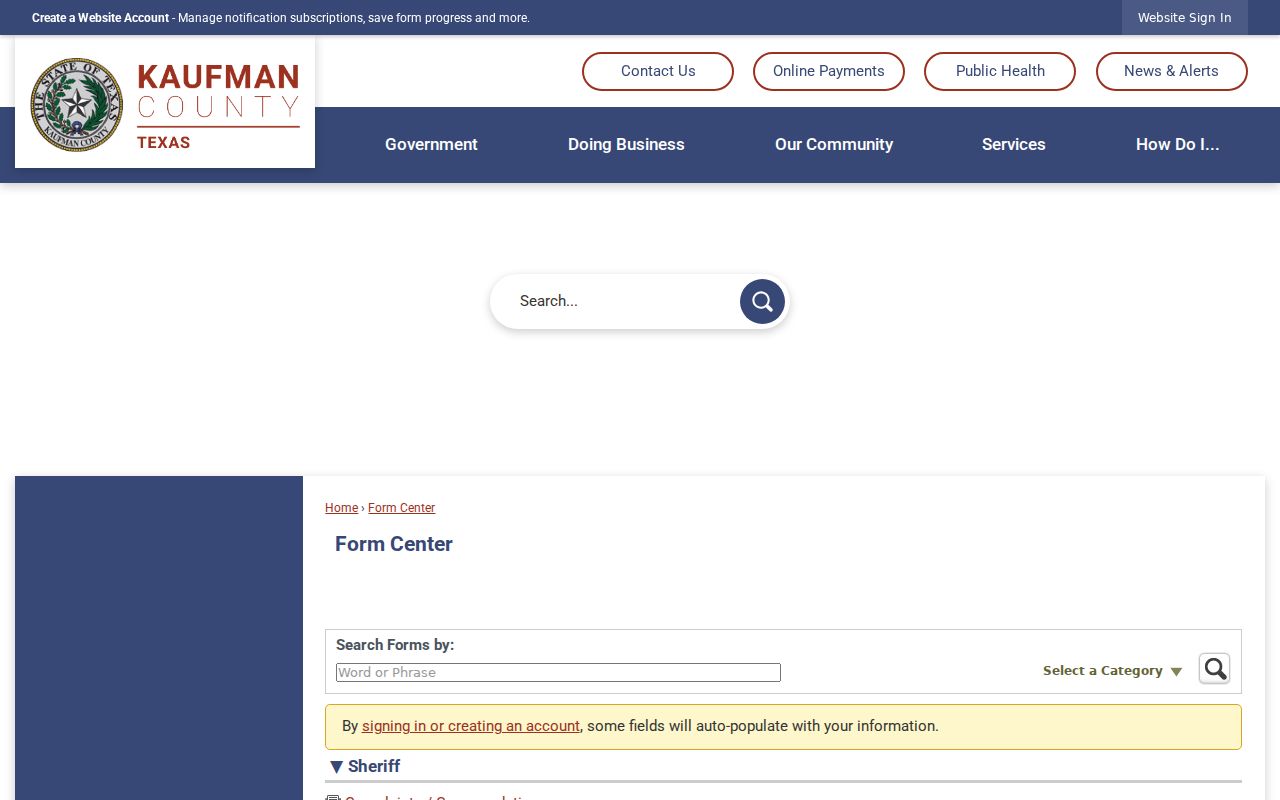
Describe the exact booking, report, date range, and public portion sought instead of asking for every record tied to a name.
Kaufman Booking Request Fallback
The Sheriff's Office and jail directory lists 1900 E US-175, Kaufman, TX 75142. The public number is 972-932-4337, fax is 972-932-9751, and published business hours are weekdays from 8 a.m. to 5 p.m. Mail goes to Drawer 849, Kaufman, TX 75142. No Sheriff-specific public-information email or complete fee schedule was located, so confirm price and delivery terms before sending payment.
Kaufman County Sheriff and Jail
1900 E US-175
Kaufman, TX 75142
972-932-4337
Weekdays, 8 a.m.-5 p.m.
Mail: Drawer 849, Kaufman, TX 75142
A focused request should name the record, incident or booking number if known, date, location, and the delivery method. Under Government Code 552.221, production must be prompt under the circumstances. That does not create an automatic ten-day delivery rule. Ask for an itemized estimate if charges may accrue and request segregable public portions when protected details need redaction.
Inside a Kaufman County Arrest Record
A Kaufman County arrest record may combine an agency report with a jail booking entry, but the fields have different custodians. The agency report identifies the incident and legal basis for arrest. The jail entry documents intake and custody. Charges remain allegations and can be rejected, amended, or replaced after prosecutor review.
| Booking number | The jail identifier used to connect intake, custody, bond, and release events. |
|---|---|
| Booking date and time | When the jail recorded intake, which may follow the arrest time. |
| Arresting agency | The Sheriff, city police, constable, DPS, or other agency that created the arrest report. |
| Charges | Intake allegations with statute or level when entered; later court charges may differ. |
| Bond and holds | Bond type or amount, issuing magistrate or court, and other agency holds when public. |
| Booking photo | Created during intake; no official Kaufman policy guaranteeing online public release was found. |
| Release or transfer | Date and manner of release, transfer, or continued custody when publicly available. |
Juvenile law-enforcement records are generally confidential under Texas Family Code Chapter 58. Victim details, private identifiers, and active-investigation facts may also be redacted.
Kaufman Arrests and 48-Hour Magistration
After booking, Texas Code of Criminal Procedure article 15.17 requires an arrested person to be taken before a magistrate without unnecessary delay and no later than 48 hours after arrest. The magistrate gives required warnings and addresses probable cause and bond functions. The time rule does not promise release within 48 hours. A court order, hold, no-bond status, or unpaid authorized bond can keep custody in place.
Booking flow: Arrest › Jail Intake › Fingerprints and Photo › Magistration › Prosecutor Review › Filed Case or Release
Bond can be cash, surety, or personal recognizance, or the record can reflect a hold. Verify payment and release instructions with the jail through its official number. Do not use an unverified payment link. A later indictment or information controls the filed case, which can be followed through Kaufman County criminal court cases.
Booking Logs and Recent Arrests
The research did not confirm a working official county roster or daily blotter interface. The DA page linked an Inmate Lookup, but that route should be rechecked at the time of use. Call 972-932-4337 for current custody. For older or released bookings, use a narrow Sheriff records request. The absence of a public list is a limitation of the access channel, not proof that no booking took place.
The County Clerk courtesy docket page can show later case settings but is not an arrest log.
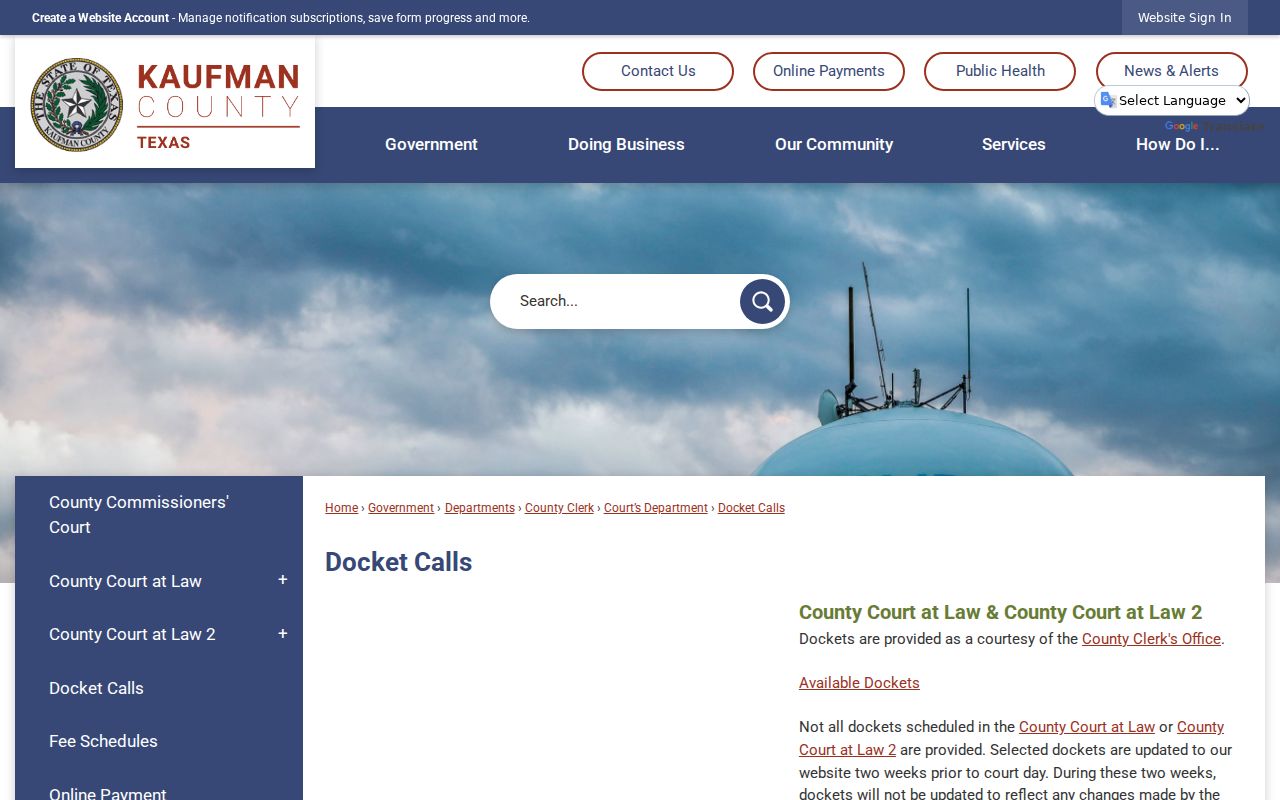
Official county records control when a reader needs the filed charge or outcome, and a courtesy docket cannot replace the booking record.
Note: A current roster, court docket, and DPS conviction search cover different stages and should not be treated as substitutes.
Kaufman Bookings Entering DPS Records
A qualifying custodial arrest produces fingerprints and a tracking control number that the booking agency transmits into the Texas criminal-history system. Prosecutors, clerks, and custody agencies later report charging, disposition, and custody events. DPS warns that its repository includes only data submitted by Texas criminal-justice agencies. Missing fingerprints, unmatched tracking numbers, delays, and absent dispositions can leave an incomplete cycle.
The public DPS name product is narrower than the nonpublic Computerized Criminal History. It presents reported public convictions and deferred adjudications, not every Kaufman County arrest. A person reviewing their own Texas record should use the fingerprint-based FAST/IdentoGO route for a more reliable identity match. If a disposition is wrong, obtain the certified court result and contact the reporting clerk and DPS Criminal History Inquiry Unit.
Kaufman Custody After a TDCJ Transfer
Once someone leaves the county jail for a state sentence, the county custody check can stop returning a current match. The TDCJ Online Inmate Search uses name, TDCJ number, SID number, sex, and race to locate state prisoners. It may show current location, incarceration offenses, sentence dates, projected release, or parole eligibility when available.
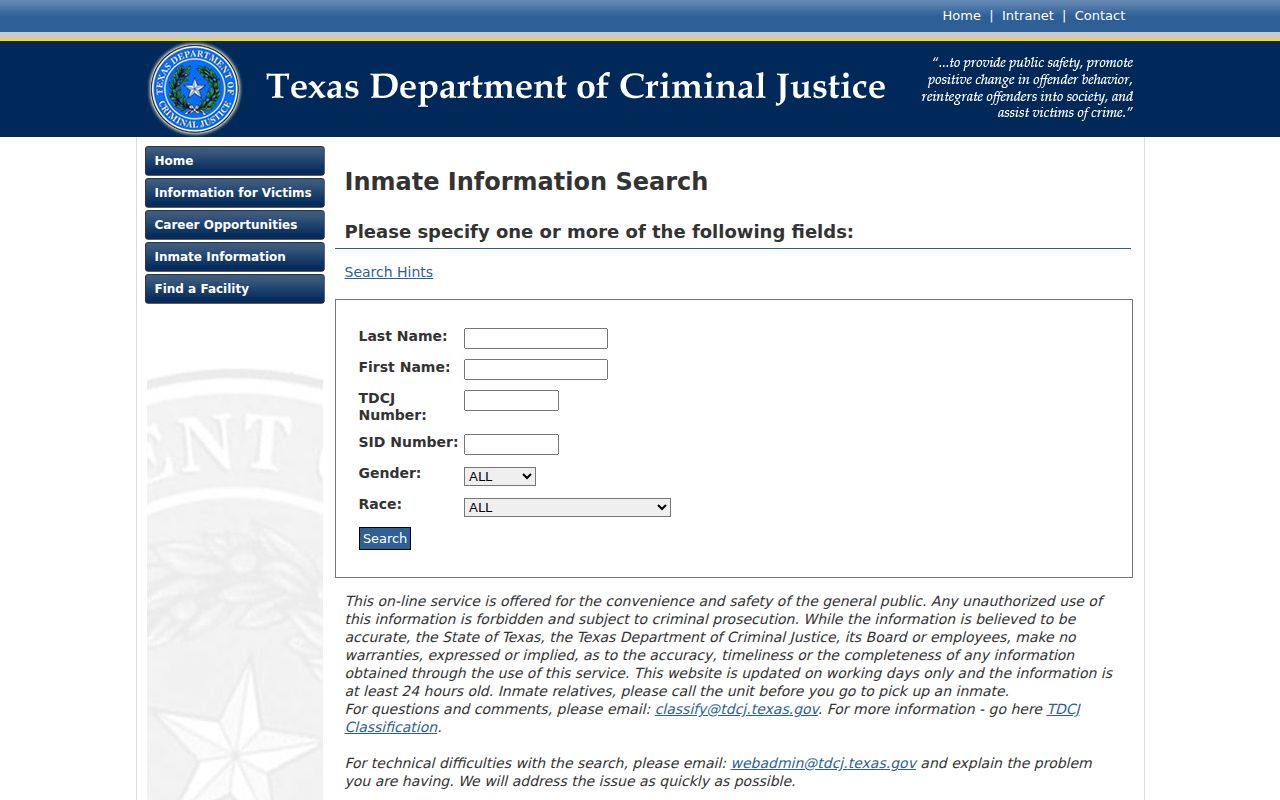
The state image marks a transfer in custody, not a replacement for the original Kaufman County booking or court judgment.
TDCJ also gives inmate information by phone at 936-295-6371 or 800-535-0283 on weekdays from 8 a.m. to 5 p.m. Without a TDCJ or SID number, exact date of birth is required. Federal custody belongs in the BOP locator. TDCJ and BOP results should never be read as a complete arrest history.
Arrests Are Not Convictions
An arrest records a law-enforcement action and allegation. A conviction follows a court adjudication and judgment. The two records arise at different times, can state different charges, and may end in very different ways. A release, rejection, dismissal, acquittal, or no-bill can close the path without a conviction. Even then, the arrest cycle does not vanish merely because the filed charge ended.
| Point | Arrest record | Conviction record |
|---|---|---|
| Creator | Arresting agency and jail | Court, then reported to DPS |
| What it establishes | An arrest and booking were recorded | A court entered a finding and judgment |
| Where it lives | Agency report and Sheriff booking system | Clerk file and public DPS subset |
| Possible ending | Release, no filing, dismissal, or later case | Sentence, appeal, nondisclosure, or eligible relief |
Record request rule: Ask the arresting agency for its report, the Sheriff for county booking data, and the clerk for the filed disposition.
Note: An arrest is not proof of guilt, and an intake charge may never become the court's filed charge.
The DA open-records page explains the formal request fields and possible prosecution exceptions.
Use that channel for DA-held public material, not as a substitute for the originating police report or clerk judgment.