
Kaufman County Criminal Court Cases
Kaufman County criminal court cases are divided by court level. The 86th, 422nd, and 489th District Courts hear felony matters under local assignments. County Courts at Law Nos. 1, 2, and 3 handle Class A and Class B misdemeanors and other assigned work. Justice courts and city municipal courts retain fine-only cases within their jurisdiction. The County Clerk Courts Department maintains misdemeanor records, while the District Clerk has statutory custody of District Court files.
This split matters more than the shared address suggests. Both clerk channels serve court users at the Kaufman County Justice Center, but a request sent to the wrong custodian may not reach the file. The filed case, rather than the arrest allegation, controls what appears on the docket. A felony indictment may differ from the intake charge, and a misdemeanor information can narrow or replace an arrest charge.
Kaufman Felony and Misdemeanor Clerks
The simplest routing rule is felony to District Clerk and Class A or B misdemeanor to County Clerk. A Class C citation stays with the issuing municipal or justice court. When the charge level is unclear, ask for the case number and court name before ordering a copy. That small step prevents a broad name request from landing at a clerk that does not hold the record.
The county's own court-custody page shows which courts the County Clerk serves. The official page is pictured below because it anchors the local misdemeanor route.
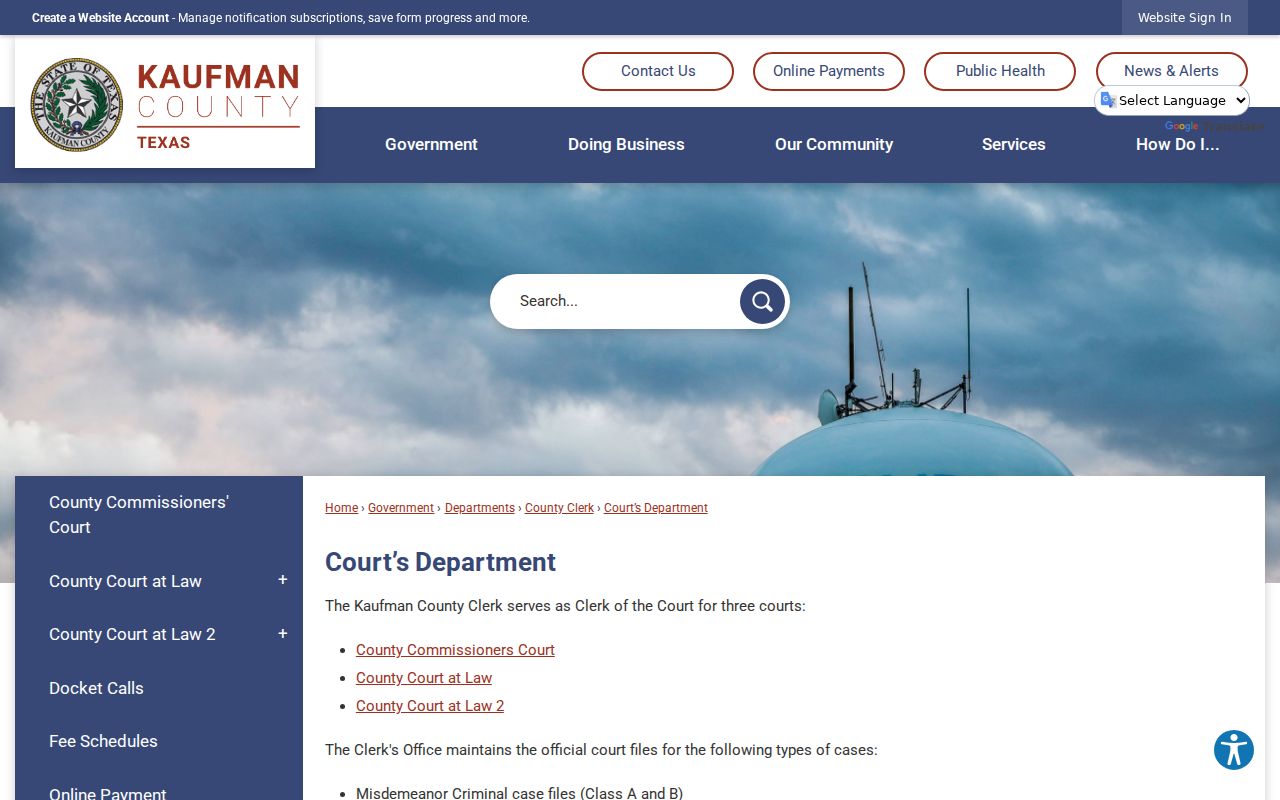
The page helps a reader distinguish the clerk's court role from the prosecutor's role and from District Clerk custody.
The District Clerk responsibilities page documents the other half of the split.
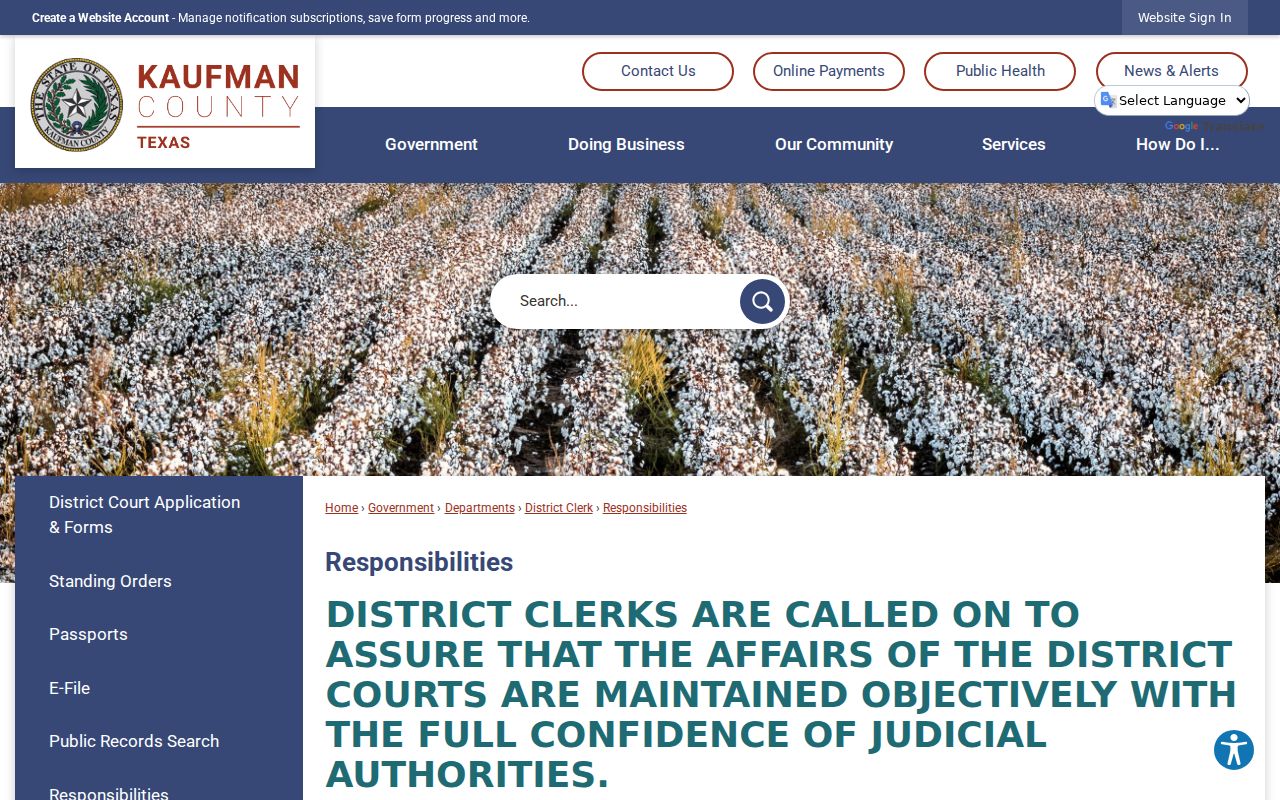
That source is the controlling route for felony dockets, judgments, and archived District Court material.
Searching Kaufman County Case Records
Begin with the County Clerk Searches and Copies page and its Court Search link. Exact names, a case number, and a narrow filing or offense period reduce false matches. For mailed misdemeanor searches, the Clerk asks for the charged person's name, the offense or conviction date within a ten-year period, the offense type if known, the fee, and a return address. The search runs only under the name submitted.
- Identify whether the case is felony, Class A or B misdemeanor, or a fine-only city or justice matter.
- Use the local court search with an exact name or case number, then narrow by date and case type when those controls appear.
- Read the case header, charge, court, status, and disposition before opening individual docket events.
- Ask the proper clerk for the docket sheet when a document is not online or an older file may need retrieval.
- Order only the plain or certified filings needed, and confirm the current total before mailing payment.
| Field or control | Type | Required | Use |
|---|---|---|---|
| Search | Keyword text | No | Enter a name, case phrase, or other available term |
| Search category | Tabs | Yes | Cases, Filings, Text in Documents, or Hearings |
| Filters | Facets | No | Narrow the displayed cases, filings, documents, or hearings |
| Case description | Result link | No | Opens Case Details |
| Export or Save search | Controls | No | Export results or store a query after sign-in |
The local search-and-copy instructions are shown below as the source for the Kaufman County criminal case route.
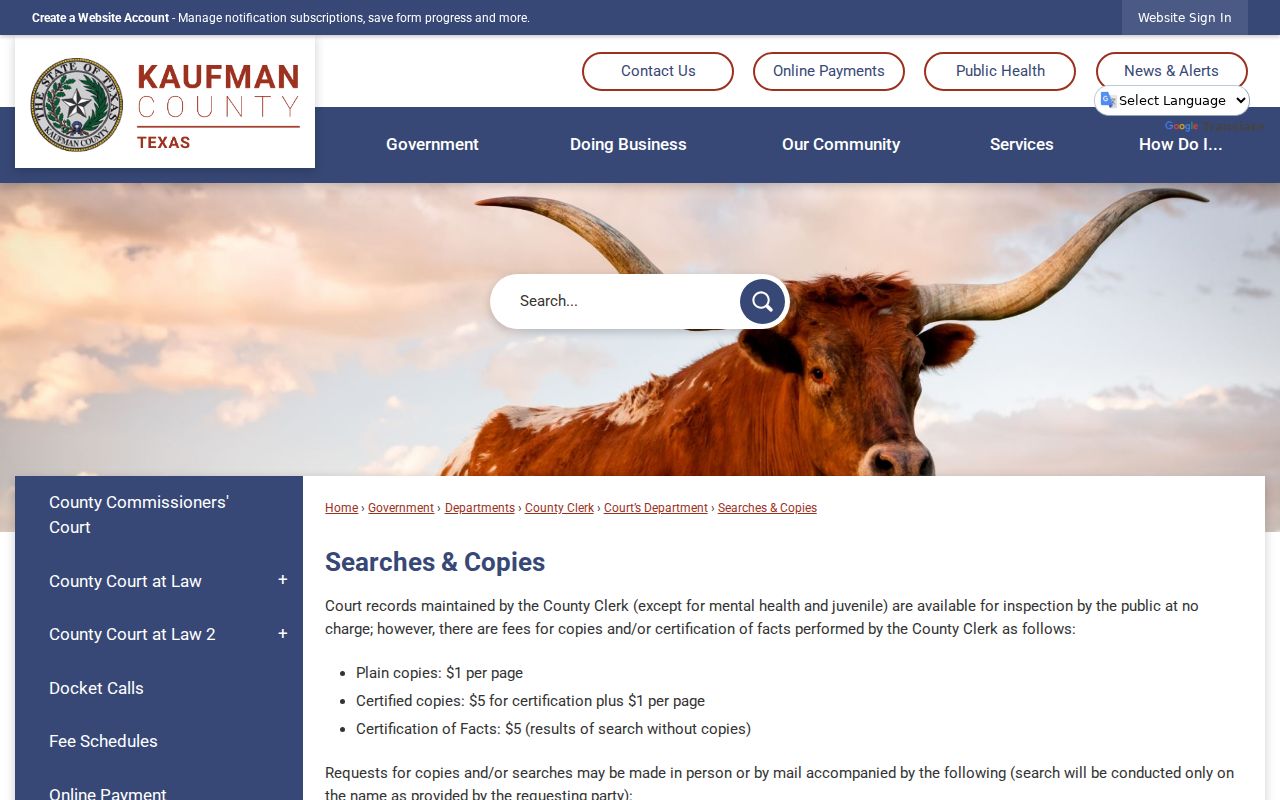
Use those clerk instructions when a portal result lacks the docket or certified disposition needed.
Kaufman Cases Missing from re:SearchTX
re:SearchTX is the statewide trial-court portal, but it is not a promise that every Kaufman County criminal document is online. Official Texas Judicial Council material said the historic corpus excluded criminal records and depended on clerk integration. A statewide query is useful for discovery, saved searches, filters, hearings, and exports. The local clerk remains the source of truth for a criminal file.
The official re:SearchTX interface pictured below shows the statewide search layer.
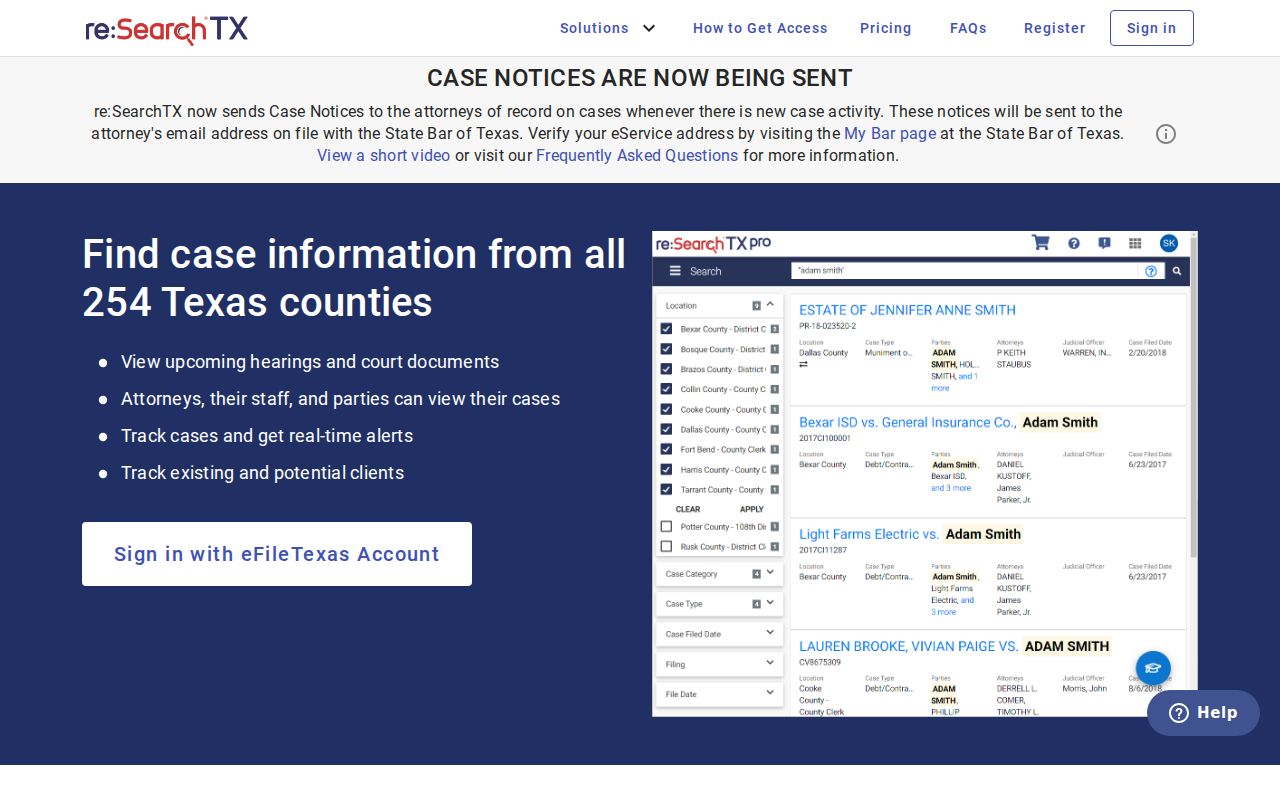
If no criminal result appears, contact the correct Kaufman County clerk, ask whether the file is electronic, paper, or archived, and request the docket sheet first.
Note: An empty statewide result does not prove that no Kaufman County court case exists.
Inside a Kaufman County Case File
A Kaufman County criminal case file records judicial acts after filing. It can include a complaint, information, or indictment; attorney appearances; bond orders; settings; motions; pleas; judgment; sentence; and later motions to revoke or adjudicate. The docket is often the best first document because it lists the events and points to the filing that answers the question.
| Case number and court | Identifies the file, assigned court, case type, filing date, and status. |
|---|---|
| Charging document | Shows the complaint, information, or indictment and the filed charge level. |
| Docket entries | List filings, capias or warrant activity, appearances, resets, motions, pleas, and orders. |
| Hearing settings | Give the hearing type, date, time, and court or judge when entered. |
| Disposition and judgment | State the outcome for each count, which may differ from the booking allegation. |
| Sentence and financial fields | May show confinement, community supervision, fines, costs, restitution, and payment entries. |
Protected personal identifiers, victim information, juvenile material, and sealed or nondisclosed data may be absent or redacted. Portal document access can also differ from what the clerk holds in the official file.
Kaufman Court Copies and Certification
Inspection of County Clerk court records is free, except for restricted mental-health and juvenile files. A plain copy costs $1 per page. A certified copy costs $5 for certification plus $1 per page, while a certification of facts is $5. Ask whether the receiving office needs a certified judgment or whether a plain docket copy will do. That choice can prevent excess page and certification charges.
The District Clerk filing-fee page is the official place to check current court fee material before sending funds.
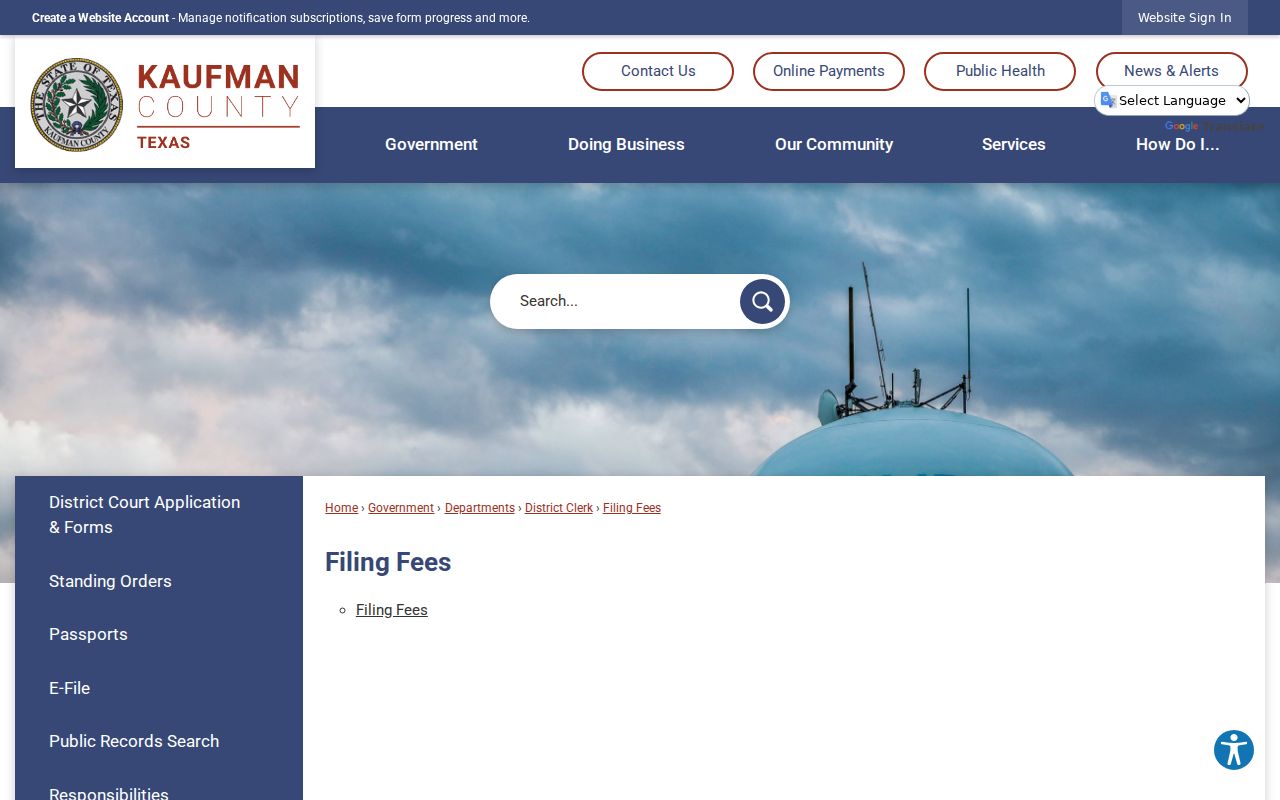
Because the research did not establish a current expunction filing total, obtain a written quote for any filing and service request.
How a Criminal Case Moves
The court file starts after the investigation and arrest have produced material for prosecutor review. Many misdemeanors begin with a complaint or information. A felony commonly moves through a grand-jury indictment, though an information can support a waived-indictment route. Arraignment states the charge and takes a plea. Pretrial entries then track discovery, motions, bond questions, and settings before a plea or trial.
Case flow: Charges Filed › Arraignment › Pretrial › Plea or Trial › Disposition › Sentencing
A disposition is the outcome recorded for a charge. A dismissal ends that charge without a conviction, but it does not by itself erase the arrest. Deferred adjudication places a person on community supervision without an immediate adjudication of guilt, subject to completion terms. For the booking event that came first, use the county arrest lookup channels.
Kaufman Treatment Court Record Trails
Specialty tracks create docket and supervision entries that differ from a straight plea-and-sentence path. The current Kaufman County treatment-court application describes County Court at Law DWI Diversion, County Court at Law 2 Mental Health Court, and the 422nd District Drug Treatment Court. DWI Diversion runs about 14 to 18 months in six phases plus orientation. Mental Health Court runs about 14 to 24 months in four phases. Drug Treatment Court runs about 12 to 18 months in four phases plus orientation.
Both the DWI and drug tracks list a $500 participation fee in the researched application. All three require Kaufman County residence and structured treatment or supervision conditions. A program entry, phase change, sanction, successful completion, or termination may appear on the court trail. Completion does not automatically equal expunction. Read the final docket and disposition, then examine any separate Chapter 55 or nondisclosure remedy.
Kaufman Prosecutor and Clerk Records
The Criminal District Attorney prosecutes both felonies and misdemeanors, but the DA is not the clerk of the filed case. The official DA page describes felony, misdemeanor, intake, appellate, investigator, and victim-services functions.
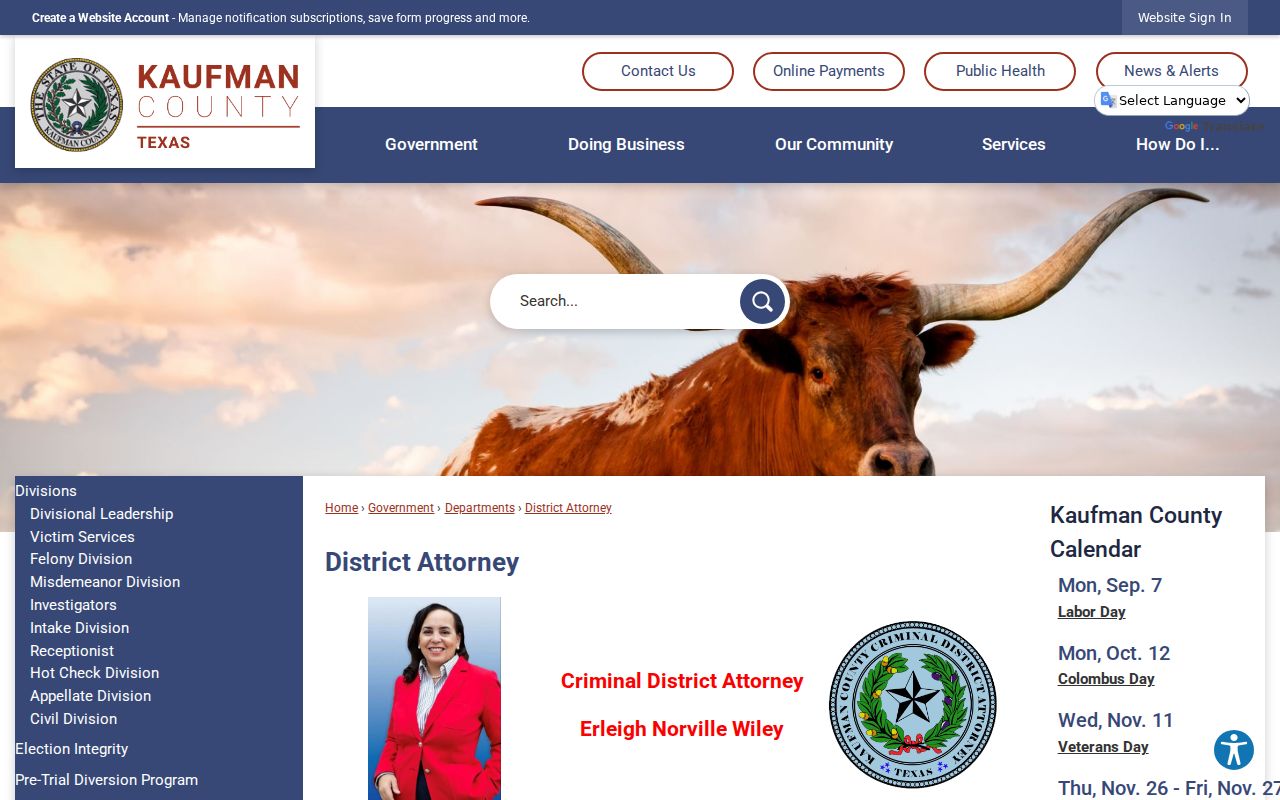
The image helps place prosecutor review beside, but not inside, clerk custody. Prosecutor mental impressions and litigation material may be withheld, while the filed charging instrument, docket, and judgment should be sought from the clerk.
A complaint is a sworn allegation. An information is a prosecutor-filed charging instrument, often used for misdemeanors. An indictment is a grand jury's formal felony accusation. A no-bill means the grand jury did not indict the charge presented, while the secret grand-jury work itself does not become a public case file.
Case Record Access & Restrictions
Texas law favors access to public records, but the route depends on the record. Filed court papers belong with the clerk. The Texas Public Information Act governs many agency records and permits law-enforcement and prosecution exceptions. Government Code Chapter 411 limits criminal-history dissemination while allowing the DPS public conviction and deferred-adjudication product.
Juvenile records, victim-identifying material, Social Security numbers, active investigative details, sealed material, expunged records, and some prosecutor work product can be restricted. Redaction of protected fields does not always require withholding the entire public portion. When a Kaufman County criminal court case does not appear online, ask the clerk whether it is paper, archived, sealed, restricted, or simply outside portal coverage.
The county's forms and e-file page shows an official court request route. Verify the requested document with the originating clerk before relying on a courtesy docket or portal copy.