
Sex Offender Checks in Kaufman County
The Texas Public Sex Offender Registry is the main public search for Kaufman County. DPS maintains the statewide data under Code of Criminal Procedure Chapter 62. A person living inside a municipality generally registers with the city's police chief or assigned registration unit. Someone living in unincorporated Kaufman County generally registers with the Sheriff, who submits the local record to DPS.
Start with the statewide portal because it supports both name and geographic searches. Use the local agency when a reported address needs prompt verification, when suspected noncompliance involves a Kaufman County location, or when registration appointment rules are needed. The federal NSOPW search adds a cross-state check but does not replace the Texas source.
The registration record reaches DPS through the local authority. That reporting chain means a city police department may be the right office for one address while the Sheriff is right for another nearby address outside city limits. Match the listed registering agency before calling. It is the local office most able to explain appointment practice or check a recent update.
How to Search the Texas Public Sex Offender Registry
Open the DPS registry and choose the search that fits what is known. A name search is useful when identity is known. A county, city, ZIP, address, or radius search is better for community awareness. Similar names and old addresses can produce confusion, so match more than one field before drawing a conclusion.
- Open the official Texas Public Sex Offender Registry and review its conditions of use.
- Enter a last name and optional first name, or choose Kaufman County and add a city, ZIP, address, or radius.
- Review the map or list and compare identity fields, photograph, aliases, and registering agency.
- Open the full profile and read the status, reported address, offense, verification, and registration details in context.
| Field or control | Type | Required | Notes |
|---|---|---|---|
| Last Name | Text | Varies by mode | Main name-search field |
| First Name | Text | No | Narrows a name search |
| Address | Text | Radius mode | Sets a geographic point |
| City, County, ZIP | Text or dropdown | No | Select Kaufman County or narrow within it |
| Radius | Dropdown | Address mode | Uses the live distance choices shown by DPS |
| Map or list | View controls | No | Changes how geographic results display |
The official Texas registry search interface is pictured below.
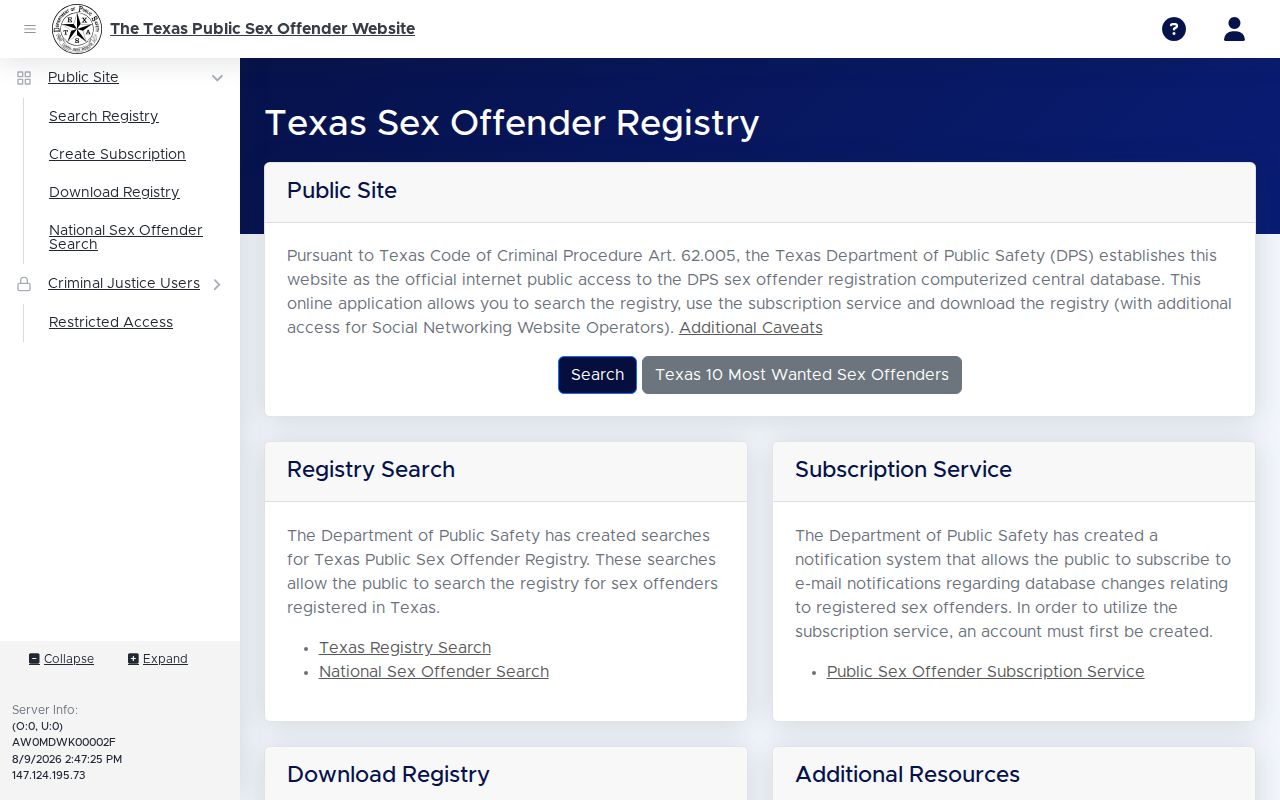
Use the live form because DPS modernization can change the placement or exact choices of controls.
Kaufman County Registry Subscriptions
A CRD Public Website account supports Public Sex Offender Subscriptions. That feature provides an ongoing alert layer beyond a one-time Kaufman County search. Subscription data should still be checked against the live profile because a notice may arrive near a move, verification, or agency update.
DPS also describes broader notification through the statewide database, local registries, required school notice, and possible local publication. English and Spanish postcards may go to the immediate community when a civilly committed sexually violent predator or an assigned high-risk offender is released or moves. Those notices are category-specific. A lack of a postcard does not mean the statewide registry has no entry near an address.
Inside a Registry Profile
A public profile combines identity, reported location, registering authority, and reportable-offense facts. Read the status and verification fields with the address. A profile can establish what DPS currently publishes, but it cannot prove that a person committed a new offense or that the address was independently checked at the moment of a search.
| Name and aliases | Public identity names associated with the registration record. |
|---|---|
| Photo and description | Current published photograph plus sex, race, age or DOB, height, weight, hair, eyes, and physical marks when included. |
| Registered address | The reported residence or described geographic location and related agency data. |
| Offense information | Reportable offense, adjudication or conviction date, victim age category, and punishment data when public. |
| Registration status | Registering agency, status, and verification information made public by DPS. |
| Other public fields | School or institution data and specified vehicle details when Chapter 62 makes them public. |
DPS does not publish Social Security numbers, driver's-license numbers, telephone numbers, online identifiers, employer details, victim identity, or juvenile information ordered nonpublic. Those omissions are statutory protections, not missing search fields.
Kaufman Public and Protected Fields
Registry access balances community notice with protection of victims, families, and private identifiers. The public side can show a current photograph, aliases, physical traits, reported address, reportable offense, and registering agency. The protected side keeps contact numbers, license numbers, online identifiers, employer data, and victim identity out of the public profile.
The DPS registration-program overview is the official source for statewide scope and notification.
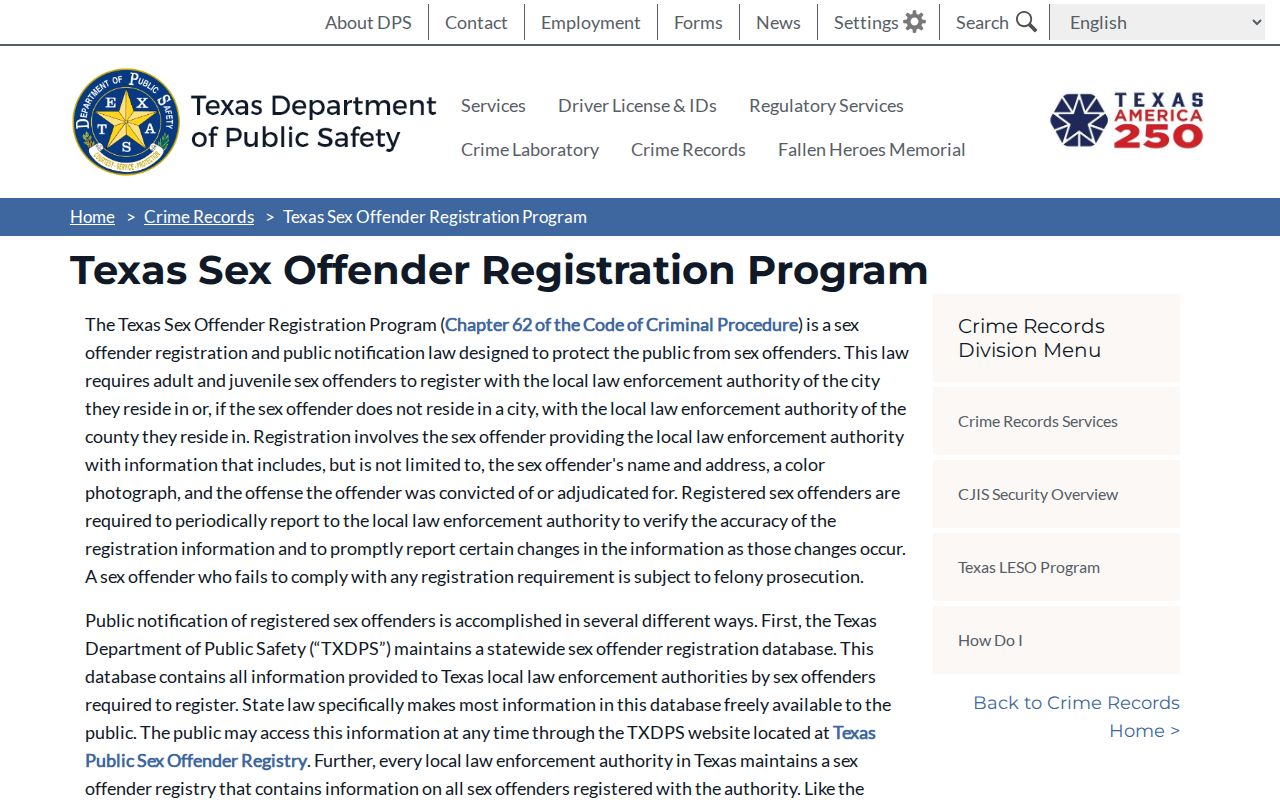
The program page provides context that a result card alone cannot supply, including the role of local authorities and Chapter 62.
Texas Registration Levels and Requirements
Texas does not use a simple public Tier I, II, and III duration table for every registration record. The reportable offense and Chapter 62 control the duty. Some registration lasts for life. Other qualifying duties continue until the tenth anniversary after release, discharge, or the end of supervision, subject to the statute. Verification frequency can be annual, every 90 days, or every 30 days based on the statutory category, risk assignment, or civil-commitment status.
| Chapter 62 framework | Duration | Verification |
|---|---|---|
| Lifetime duty categories | Life, as the current statute provides | Annual, 90-day, or 30-day schedule may apply by category |
| Ten-year duty categories | Generally through the tenth anniversary after release, discharge, or supervision ends | Frequency follows the applicable Chapter 62 provision |
| High-risk or civil commitment categories | Determined by the governing reportable offense and status | More frequent verification and special notice can apply |
Do not infer a duration from a generic federal tier label. Read the reportable offense and current Texas Code of Criminal Procedure Chapter 62, or ask the registering authority about the applicable schedule.
Kaufman Registry Duties Since 1991
Texas registration began September 1, 1991. Retroactive rules can reach reportable conduct from September 1, 1970 when the person remained in the criminal-justice system for that offense on or after September 1, 1997. This history is one reason an old conviction date does not by itself tell a reader whether a current duty exists.
The governing law has changed over time, and the registry interface has also been modernized. A Kaufman County profile should be read under the law and status now shown, not under a remembered rule from the conviction year. For a dispute about duty or duration, the public profile is a starting point, not a substitute for the registering authority or legal analysis.
Cross-Checking Kaufman Results with NSOPW
The Dru Sjodin National Sex Offender Public Website searches public registries across participating jurisdictions. It is most useful when a person may have moved across state lines or the relevant location falls outside Texas. Begin with DPS for a Kaufman County address, then use NSOPW to add the cross-jurisdiction layer.
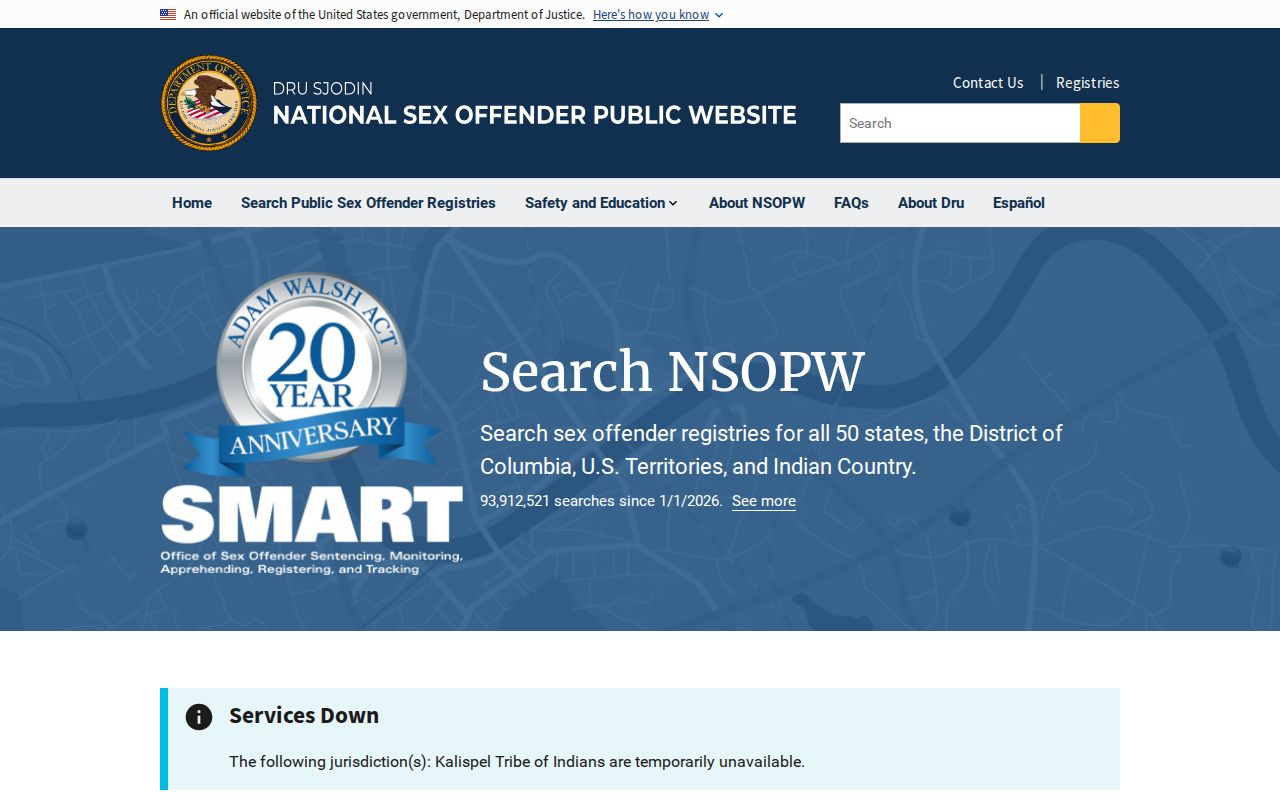
The national interface broadens geographic reach, while the Texas profile and Kaufman registering agency remain the best sources for a local status question.
A difference between the two results can reflect timing, jurisdiction participation, matching, or an update in transit. Compare the identity fields and contact the local authority when a current Kaufman County address is central to a safety concern.
Community Notification and Lawful Use
Registry information is published for safety planning and community awareness. It should be read carefully. A registration entry concerns a prior reportable offense and a legal reporting duty. It is not evidence of a new crime, a forecast of conduct, or permission for private retaliation. Address information can also reflect the last agency update, so urgent verification belongs with law enforcement.
Chapter 62 misuse warning: Public registry information may not be used to injure, harass, or commit a criminal act against a registrant or family. Misuse can lead to criminal or civil consequences under applicable law.
Report suspected noncompliance to the city police registration unit for an address inside city limits or to the Kaufman County Sheriff for an unincorporated address. DPS Sex Offender Registration can be reached at 512-424-2800. Use 911 for immediate danger. Give the location and observed facts rather than assuming noncompliance from an old screenshot or a map marker.
Note: Confirm urgent registry facts with the registering agency because public address and verification fields can change after the search.