
Checking Criminal History in Kaufman County
A useful search begins with the record, not just a name. A fresh jail entry, an officer's report, a filed charge, and a DPS criminal-history entry come from different custodians. Gather the full legal name, date of birth, spelling variants, an approximate event date, and any known case or report number. Those details reduce false matches and help the clerk search the correct ten-year period for a mailed misdemeanor request.
Kaufman County criminal history research works best as a short chain of checks. Follow each event from its source, and use certified copies when the exact court result matters.
- Call the county jail for current local custody, or request the incident report from the agency that made the arrest.
- Search the County Clerk for Class A or B misdemeanors and the District Clerk for felony cases.
- Compare the filed charge, docket, disposition, and sentence rather than relying on the booking allegation alone.
- Use the DPS public search for reported Texas convictions and deferred adjudications, not as a live arrest log.
- Order the specific clerk copy or obtain a fingerprint self-review when identity or completeness must be confirmed.
Kaufman County Records: Four Keepers
One arrest may create four related Kaufman County criminal records. The arresting agency writes the incident and probable-cause report. The jail records intake, fingerprints, bond, holds, and release. A prosecutor and clerk create the court file only if a charge is accepted. DPS later receives fingerprint and disposition data from Texas justice agencies.
This split explains common gaps. A dismissal in a clerk file does not erase the earlier booking. A DPS name search may show a deferred adjudication but omit a non-conviction event. A jail no-match may mean the person was released or transferred. The sound approach is to compare the sources that answer the same event.
The official Kaufman County directory shows the local offices that form this chain.

The county directory helps route a request to the clerk, sheriff, prosecutor, or supervision office that actually holds the requested record.
Texas Official Background Checks
The Texas Department of Public Safety Crime Records Division maintains the statewide repository. Its public name product contains reported Texas convictions and deferred adjudications. It is narrower than the nonpublic Computerized Criminal History, and DPS warns that the data depends on what justice agencies report. Similar names also create a risk of selecting the wrong person.
For self-review, fingerprint comparison is the more reliable route. A person schedules FAST capture through IdentoGO, pays the $15 DPS record-review fee and $10 FAST collection charge, and follows DPS instructions for receiving the result. Two hard fingerprint cards cost $20. The FBI Identity History Summary is a separate, subject-only federal product.
| Official channel | Scope | Published cost |
|---|---|---|
| DPS public name search | Reported Texas convictions and deferred adjudications | $1 credit, plus card surcharge |
| DPS offline name check | DPS name-based product | $10 |
| DPS fingerprint self-review | Own Texas criminal history | $15 plus $10 capture |
| Kaufman clerk inspection | Filed local court records | Free inspection |
Kaufman County DPS Record Search
The DPS public conviction search requires an account and prepaid search credits. Search by name, add a date of birth when known, and preview possible matches before opening the full public record. The preview step matters because spending a credit does not turn a name match into fingerprint proof.
| Control | Use | Key limit |
|---|---|---|
| Account | Register or sign in | Required before searching |
| Name | Enter the subject's name | Spelling affects matches |
| Date of birth | Narrow similar names | Use only when known |
| Preview | Review possible records | Not an identity confirmation |
| Complete record | Open the selected public entry | Public data is limited in scope |
The official DPS interface shows why a public statewide result should be checked against Kaufman County court records.

A clerk disposition can explain a charge that the statewide public product does not display.
Criminal Record Types
Kaufman County criminal records describe different stages, and each stage has its own value. An incident report documents what an agency investigated. An arrest report states the asserted basis for taking someone into custody. A booking record tracks jail intake. None of those records proves guilt.
Charging papers and court files show what prosecutors filed and what judges did. DPS history connects reported fingerprint arrest cycles with dispositions. Custody and supervision records then show a jail, prison, probation, or parole status. Registry records have a separate public-safety purpose under Chapter 62.
- Police and sheriff reports: request them from the agency whose officer created the file.
- Bookings: ask the Kaufman County Sheriff's Office about local intake and custody.
- Court cases: use the County Clerk for Class A and B misdemeanors and District Clerk for felonies.
- Warrants: confirm case-linked process with the issuing court and execution details with law enforcement.
- State records: use DPS for public conviction data and TDCJ for sentenced state custody.
Kaufman County Criminal Records Campus
The county's main criminal-record offices sit close together but do not share one counter. The Sheriff's Office and jail are at 1900 E US-175. The Kaufman County Justice Center is next door at 1902 E US Highway 175 and houses the current criminal court and prosecution functions. Older search results may point to the historic courthouse on West Mulberry, so callers should confirm the destination before travel.
Kaufman County Sheriff
1900 E US-175
Kaufman, TX 75142
972-932-4337
Weekdays, 8 a.m.-5 p.m.
Kaufman County Justice Center
1902 E US Highway 175
Kaufman, TX 75142
469-376-4100
Weekdays, 8 a.m.-5 p.m.
Kaufman County CSCD
408 E College Street
Terrell, TX 75160
469-376-4700
Community supervision
That last address is a local trap: adult probation operates in Terrell, not at the Justice Center.
Inside a Kaufman County Criminal Record
A Kaufman County criminal record may identify a person, event, charge, and outcome, but the fields depend on its source. Names and dates help match a file. Agency and tracking numbers connect an arrest cycle. The charge description and statute show the allegation, while the disposition and sentence show what the court ultimately ordered.
| Name and identifiers | Primary name, aliases, birth data, physical descriptors, SID or tracking numbers when public. |
|---|---|
| Arrest and booking | Agency, event date, initial charges, booking number, bond, holds, release, or transfer. |
| Filed case | Case number, court, charge level, filing date, counsel, settings, motions, and orders. |
| Disposition | Dismissal, acquittal, conviction, deferred adjudication, or another reported outcome. |
| Sentence | Confinement, fine, restitution, or community-supervision terms stated in the judgment. |
| Custody status | County jail, TDCJ, federal custody, parole, or other reported supervision information. |
- Disposition
- The recorded result of a charge.
- Deferred adjudication
- Community supervision without an immediate finding of guilt, subject to successful completion.
- Capias
- A court writ directing an arrest in an existing matter.
- Nondisclosure
- An order that limits public release of eligible history without destroying every record.
Read each label in context. A charge field states an accusation, while the disposition and judgment establish how the filed case ended.
Kaufman County Treatment Court Records
Kaufman County operates named alternatives that can change how a case proceeds. They include the 422nd District Drug Treatment Court, a DWI Diversion track, a Mental Health Court, and the Criminal District Attorney's Pretrial Diversion Program. Acceptance is not automatic, and completion does not itself erase the court trail.
The official pretrial diversion page states a $500 felony program fee or $350 misdemeanor fee, plus $50 per month for supervision and required testing or classes. Indigency rules may reduce or waive the program fee. A completed contract can avoid prosecution and a potential conviction, but expunction eligibility still depends on Chapter 55 and the full arrest episode.
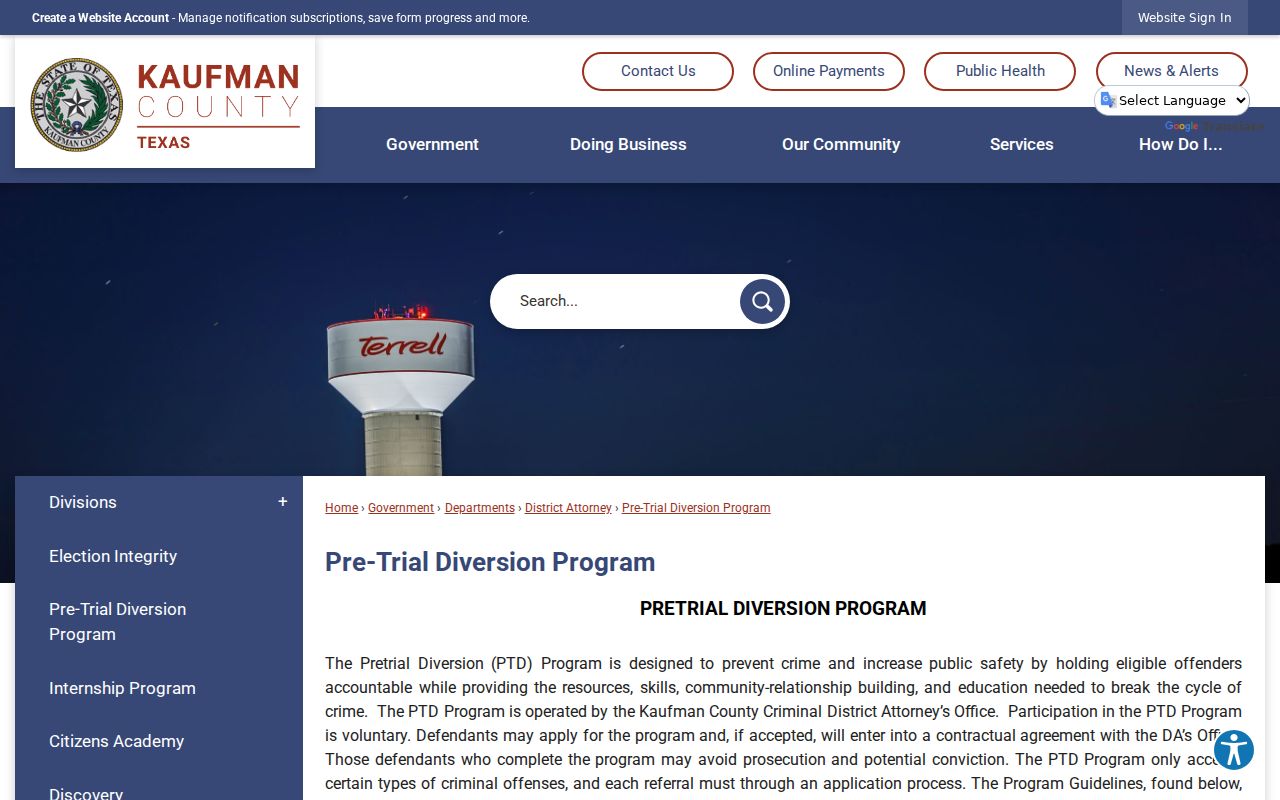
The program page documents a local case path that differs from an ordinary plea or trial, while leaving readers to verify the docket and any later record-clearing order.
Public Access Laws in Texas
The Texas Public Information Act supports prompt access to government records while allowing specific law-enforcement and prosecution exceptions. Filed court documents usually belong with the clerk, not in a broad request to the prosecutor. DPS criminal-history data follows separate dissemination rules, and juvenile, victim, identity, and active-investigation information may be withheld or redacted.
Key Texas laws:
Government Code Chapter 552 creates the public-information process and law-enforcement exceptions.
Government Code Chapter 411 limits criminal-history dissemination while authorizing the DPS public conviction product.
Code of Criminal Procedure Chapter 55 sets Texas expunction rules.
Code of Criminal Procedure Chapter 62 governs sex-offender registration and public registry data.
Ask for public portions and a cost estimate when a complete report cannot be released.
Kaufman County Jail Record Routes
No verified county-wide public roster was available in the official sources used for this build. The practical Kaufman County criminal record route is the jail phone at 972-932-4337 for current custody, followed by a focused Sheriff Form Center request for older or nonpublic-facing booking material. The arresting city police department remains the source for its own incident narrative.
Once a person leaves local custody, the locator changes. TDCJ covers state prison and state-jail custody. Its phone lines also answer status questions when identifying data is supplied. The federal Bureau of Prisons covers federal custody, not Kaufman jail bookings. TDCJ's Integrated Victim Services System provides confidential custody and parole notifications.
The TDCJ victim notification portal illustrates the state-level status channel.
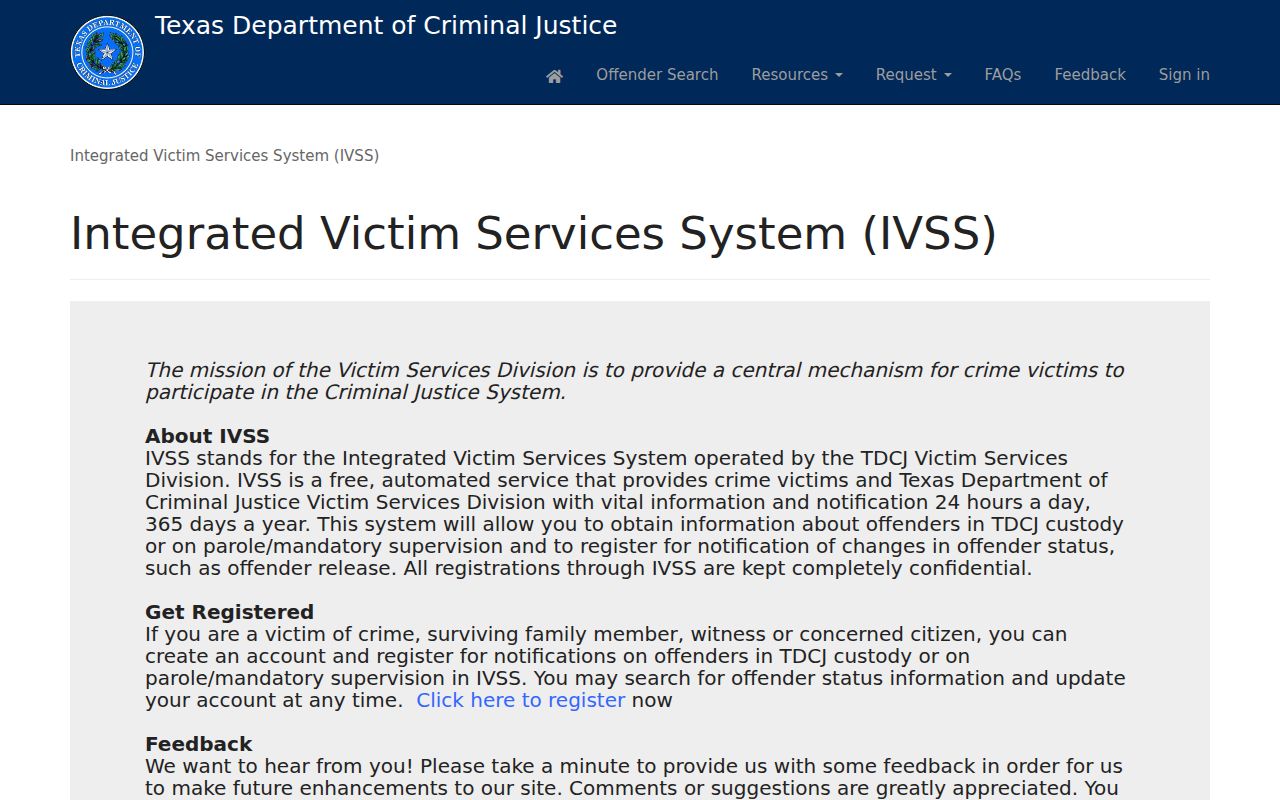
IVSS adds alerts but does not replace the county jail or clerk as the source for a Kaufman event.
Sealed, Expunged, and Restricted Records
Texas expunction is an eligibility-based Chapter 55 remedy, not a general way to erase any conviction. Qualifying circumstances can include certain acquittals, pardons, dismissals, identity theft, or cases in which no charge was filed after the required conditions and time periods. Every charge tied to the arrest must be analyzed.
An order of nondisclosure is different. It limits public release for eligible deferred adjudications and certain convictions, but authorized agencies may retain access. Juvenile records, victim details, active-investigation material, Social Security numbers, and prosecutor work product also have separate restrictions. A blank portal result is not proof of an expunction.
The Kaufman District Clerk publishes a current agency list for petitions and orders. Obtain certified dispositions, name each required custodian, file in the proper district court, and verify implementation after the order. A cached or incorrectly reported official entry may require the certified order and a correction request to the custodian or DPS.
Kaufman County Warrant Record Checks
Kaufman County does not publish one verified comprehensive warrant list. Start with the issuing court for a case-linked capias or municipal warrant. Call the sheriff about county execution or booking information. Search the public docket when available, and submit a focused records request for releasable information if the direct channels do not answer the question.
Warrant terms are not interchangeable. An arrest warrant follows a probable-cause finding. A capias commands arrest in a pending case. A capias pro fine concerns enforcement after judgment. Search warrants authorize a search of a place or item and are not a public name database. Sealed, juvenile, or unexecuted investigative process may be unavailable.
To resolve one's own possible warrant, confirm the court, case number, bond terms, and required appearance through official phone numbers. Obtain written clearance and allow time for connected systems to update.
Kaufman County Police Record Paths
No county office pools every city police report. Forney, Terrell, Kaufman, and other municipal departments retain the reports their officers create. The sheriff holds its own unincorporated-county reports and county booking records. Requests should name the event date, location, report number when known, involved role, and exact item, such as the public incident report, crash report, CAD log, or a defined body-camera segment.
Probation and parole follow another split. Kaufman County CSCD in Terrell handles local community supervision, while a judgment and clerk docket show the public sentence. The Texas Board of Pardons and Paroles makes release and revocation decisions, and the TDCJ Parole Division supervises people released to the community.
The Kaufman County CSCD page identifies the local supervision office.
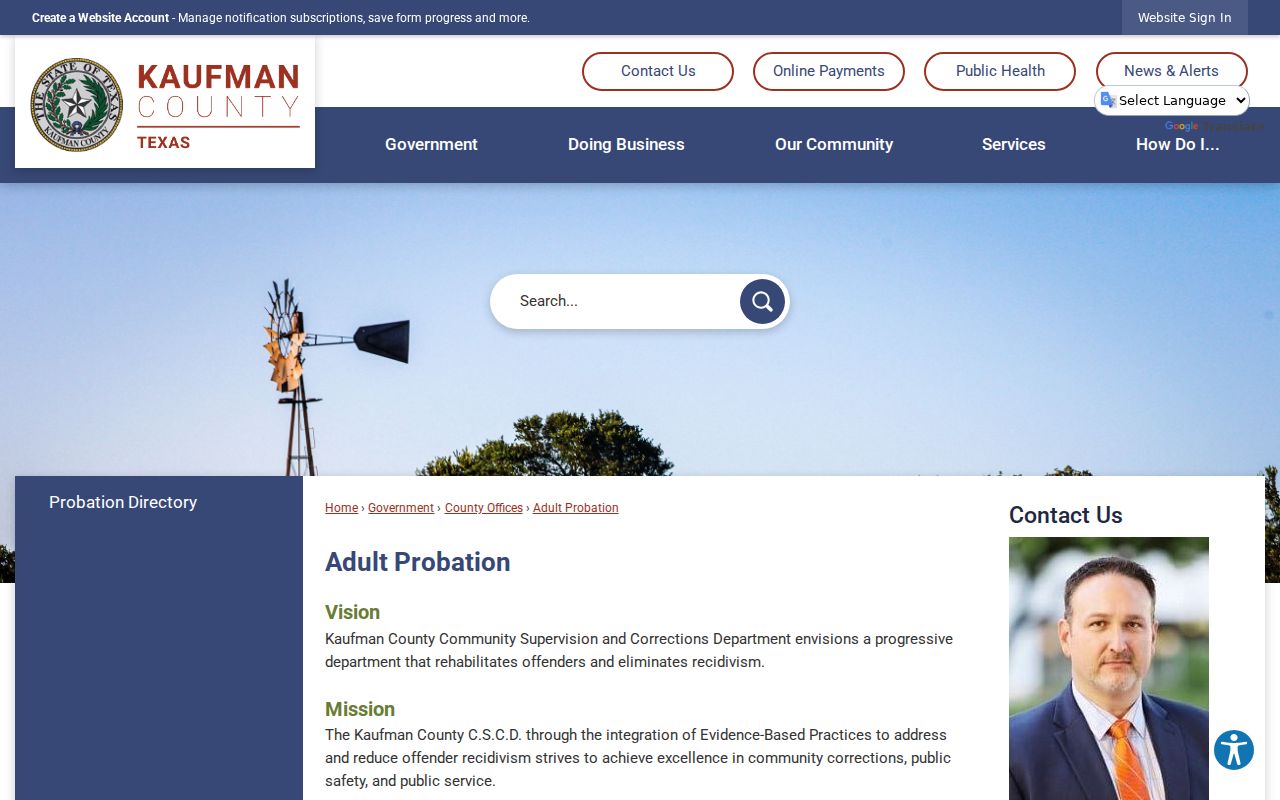
The separate Terrell location is why a court-record search and a supervision inquiry do not go to the same counter.
Kaufman County Federal Record Layers
Kaufman County lies in the Northern District of Texas, but a county search does not reveal every federal matter. PACER is the official federal docket and document system. The Bureau of Prisons locator reports federal custody. These channels do not replace the Kaufman County clerks, jail, or DPS repository.
The PACER portal handles federal case access and registration.
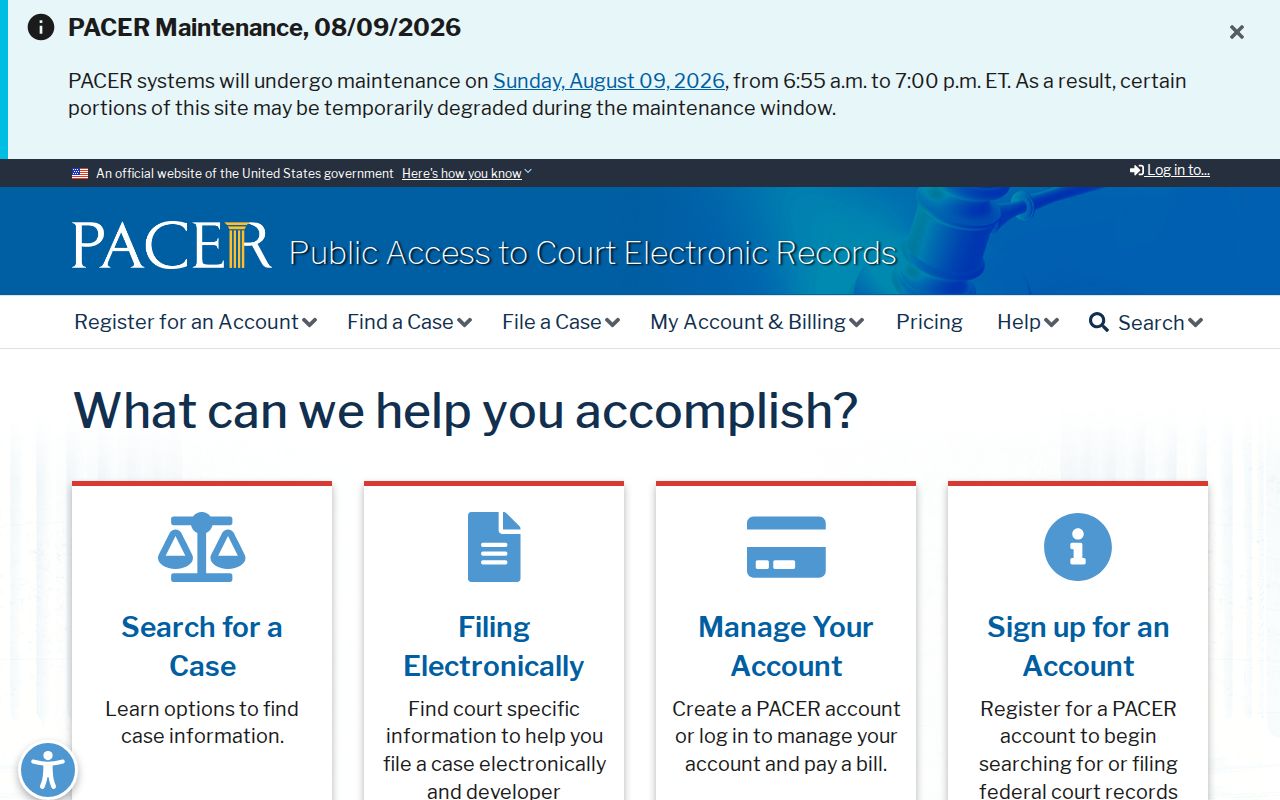
PACER should be used only when the event is federal, while county charges remain with Kaufman clerks.
The Bureau of Prisons locator serves the separate federal custody layer.
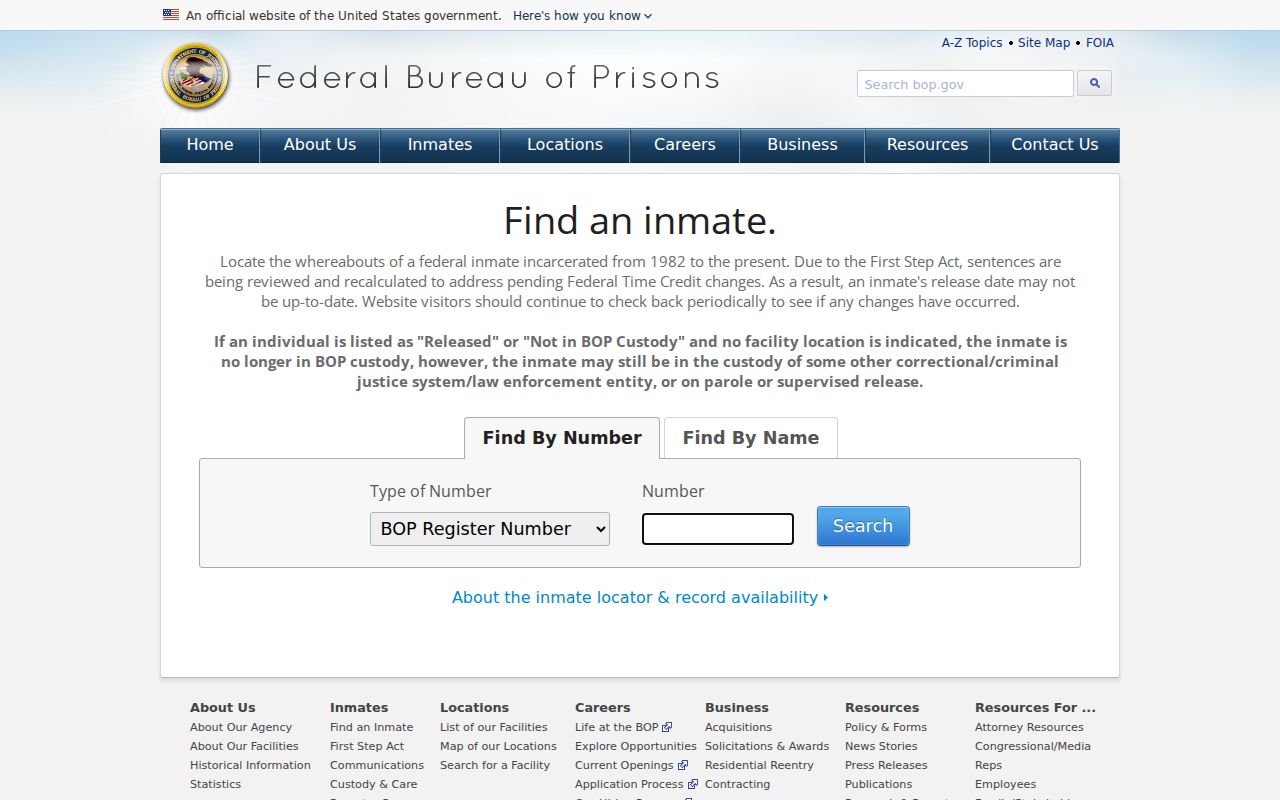
A BOP no-match says nothing conclusive about local jail custody or a state TDCJ placement.
Kaufman County Fingerprint Record Review
Fingerprint self-review is the best official answer when a person needs to confirm identity, locate a reporting error, or understand their own Texas repository history. FAST appointments are captured by IdentoGO. No current official storefront inside Kaufman County was confirmed, so use the live location tool rather than relying on a guessed address.
The FAST appointment portal supplies current enrollment and site choices.
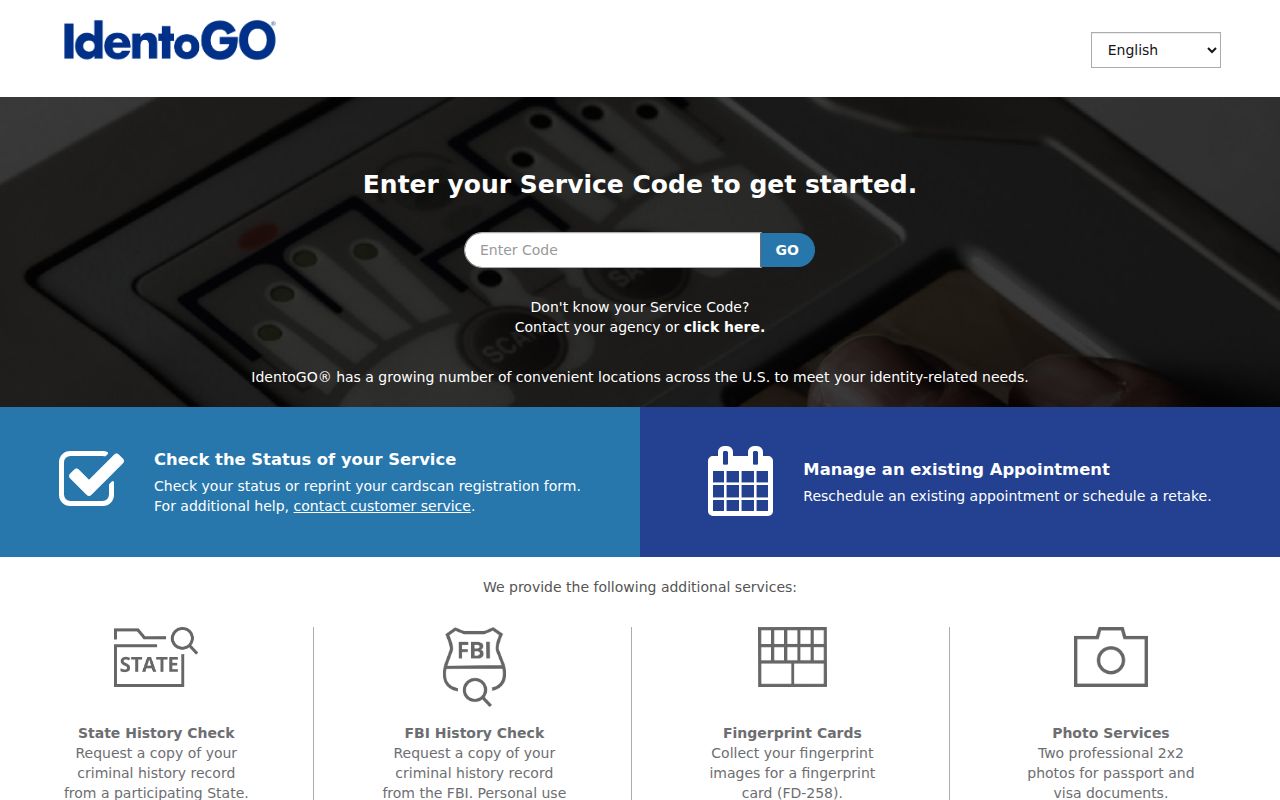
If the response contains an error, obtain the certified Kaufman court disposition and contact the reporting clerk or DPS Criminal History Inquiry Unit as appropriate.
Kaufman County Criminal Records by City
City police departments preserve their own incident reports, while municipal courts hold fine-only Class C, traffic, and ordinance cases. The three largest incorporated cities also have distinct request portals, hours, and custody arrangements. Forney has a local holding facility. Terrell has a detention function and NextRequest. Kaufman Police sends all arrested people to the county law-enforcement center.
Forney Criminal Records
Population 41,658 · Police records, local holding, and Municipal Court of Record No. 1.
Terrell Criminal Records
Population 23,921 · Police records, NextRequest, detention, and Municipal Court.
Kaufman Criminal Records
Population 10,717 · Written police requests, county jail routing, and Municipal Court.
Each city page stays at city level, while the county clerks and DPS remain the routes for higher charges and statewide history.